
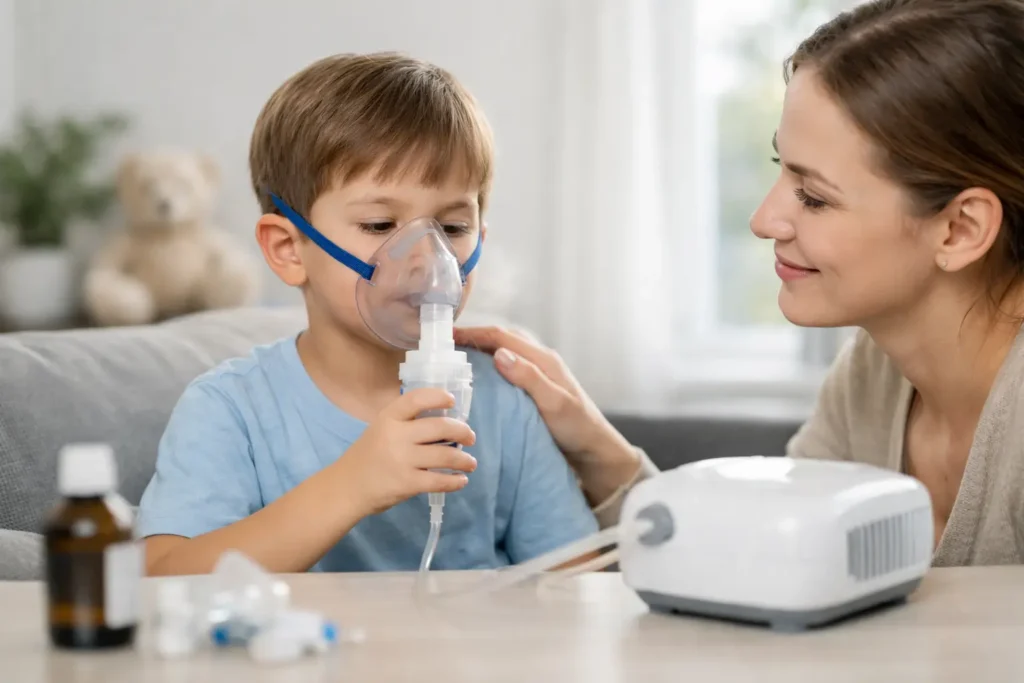
When your child starts asking for the nebulizer before bed, you know this is no longer just a rough patch. For many mothers, figuring out how to reduce child nebulizer dependence becomes urgent when cough flare-ups keep stealing sleep, school days, and peace of mind. You are not trying to be reckless. You are trying to stop the cycle where every small trigger turns into another treatment, another disrupted night, and another week of holding your life together with very little margin.
That goal has to start with one clear truth: reducing dependence does not mean stopping medical care overnight. It means helping your child become less reactive, less inflamed, and less likely to need repeated rescue support in the first place. For some children, that change happens quickly. For others, it takes a more layered approach. Either way, the real work is not just in the machine. It is in the daily pattern around the child.
What drives nebulizer dependence in the first place
A nebulizer is a tool, not the root problem. If a child keeps needing it, something is repeatedly irritating or weakening the respiratory system. In most families, the pattern is a mix of things rather than one single cause. Allergy burden, frequent viral exposure, dust in the bedroom, poor airway resilience, mucus buildup, cold drinks, late nights, and slow recovery after each illness can all stack on top of each other.
This is why many parents feel confused. The child may improve for a few days, then suddenly cough again after school, after running, after the air conditioning is too cold, or after a week of bad sleep. It can look random when it is actually cumulative. The lungs and airways are simply not getting enough time or support to fully settle.
That is also where dependence quietly grows. A child begins to rely on immediate relief because the baseline condition never truly stabilizes. Parents do the same because they cannot afford another 2 a.m. panic. That response is understandable. But if the pattern is never interrupted, the need becomes more frequent.
How to reduce child nebulizer dependence safely
The safest path is always gradual and observant. You do not remove support first and hope for the best. You build a stronger foundation so the need naturally decreases.
Start by tracking patterns for two to three weeks. Not just symptoms, but timing. When does the cough begin? After school? At night? After certain foods? During rainy days? In air-conditioned rooms? This simple step matters more than many parents realize. It helps you separate true worsening from trigger-driven episodes, and it gives you something concrete to discuss with your child’s doctor if you are considering any change.
The next step is reducing the daily irritant load. If the room is dusty, if bedding is rarely hot-washed, if soft toys collect allergens, if strong fragrances are used around the child, these can keep the airway on edge. A child with sensitive breathing often does better when the environment becomes boring in the best possible way – cleaner air, fewer triggers, steadier routines.
Sleep also deserves more respect than it usually gets. Overtired children recover poorly. Their immune systems take more hits, and nighttime coughing often worsens when the body is run down. For busy mothers, this can sound unrealistic. But even shifting bedtime earlier and protecting a more consistent sleep window can lower the frequency of flare-ups over time.
The mistake parents make when trying to cut back
The most common mistake is reacting only when symptoms explode. That approach keeps you trapped in rescue mode. If your child always waits until breathing is clearly irritated before support begins, the airway has already become harder to calm.
The second mistake is swinging too far the other way and removing everything at once. That usually comes from desperation. A parent sees a good week and decides the problem is over. Then one exposure, one cold, or one late bedtime sends the child back into coughing and the family loses confidence again.
A better approach is measured reduction under proper clinical guidance, while strengthening the child’s day-to-day respiratory resilience. This is where natural support can fit, especially for families who are tired of living between temporary relief and the next relapse. It is not about replacing emergency care. It is about helping the body become less fragile between episodes.
Build respiratory resilience between flare-ups
If you want to know how to reduce child nebulizer dependence in a way that actually lasts, focus on the periods when your child seems “fine.” That is when the groundwork happens.
Hydration matters because sticky mucus is harder to clear. Gentle movement matters because children who stay completely sedentary often hold congestion longer. Warm, simple meals during recovery can be easier on a sensitive system than a steady stream of cold, sugary foods that seem harmless but often show up again in symptom patterns.
Then there is immune and airway support. This is where many mothers get frustrated because they have already tried random syrups, powders, and supplements that created more clutter than progress. The issue is usually not that support is pointless. The issue is that it was never structured. A child with recurring respiratory weakness often needs a consistent protocol, not a grab bag of products used only when panic starts.
That is one reason some parents look for coached natural support, including protocols built around tiger milk mushroom, which has gained attention for respiratory and immune support. The appeal is not just that it is natural. It is that when used as part of a guided routine, it can be easier to maintain than treatments that disrupt the entire household. For a working mother, convenience is not a luxury. It is the difference between following through and giving up by week two.
Why some children improve faster than others
Not every child’s dependence comes from the same place. A child whose main issue is allergies may improve when triggers are controlled aggressively. A child who is constantly exposed to viruses at school may need more time because every small infection reactivates the cycle. A child with poor sleep, enlarged tonsils, eczema, food sensitivities, or ongoing sinus congestion may also need a broader plan.
That is why blanket advice often fails. Two children can both use a nebulizer often, yet need very different next steps. Mothers who are used to solving problems efficiently can find this maddening. But respiratory health is rarely a one-variable issue.
The good news is that patterns are usually there if someone takes the time to assess them properly. Once the child’s triggers, frequency, recovery time, and daily burden are understood, the path becomes much clearer. You stop guessing. You start deciding.
When to involve your doctor right away
If your child has wheezing, labored breathing, chest retractions, blue lips, unusually fast breathing, or worsening symptoms that do not respond the way they normally do, this is not the moment for experimentation. Medical evaluation comes first. The same applies if you are thinking about reducing prescribed respiratory treatments. Changes to medication plans should be guided by your child’s clinician.
Natural support works best as part of a responsible strategy, not as a substitute for urgent care. Strong mothers know the difference between being proactive and being risky.
The Real Goal of Reducing Child Nebulizer Dependence Is Not Less Use by Itself
Less nebulizer use is only meaningful if your child is genuinely doing better. The deeper goal is fewer nighttime cough attacks, fewer school absences, fewer frantic clinic visits, and fewer evenings where you sit beside a machine wondering how long this will keep running your household.
That is why the conversation has to move beyond symptom suppression. Your child needs stronger day-to-day resilience. You need a plan that respects how full your life already is. And you need support that does not depend on endless trial and error.
For many families, this is the turning point. They stop asking, “What can I use tonight?” and start asking, “What will help my child need less of this next month?” That shift changes everything. It brings you out of pure survival mode and into a more stable, hopeful rhythm.
If you have been carrying this alone, exhausted and second-guessing every choice, know this: needing a better plan does not mean you have failed. It means the pattern is asking for a deeper response. And when you address the child, the triggers, the routine, and the respiratory foundation together, dependence often begins to loosen in a way that finally feels real.
Pingback: Parents Guide to Tiger Milk Mushroom - tigroxbystella.store
Pingback: Why Child Respiratory Health Coaching Works | Coach Stella