
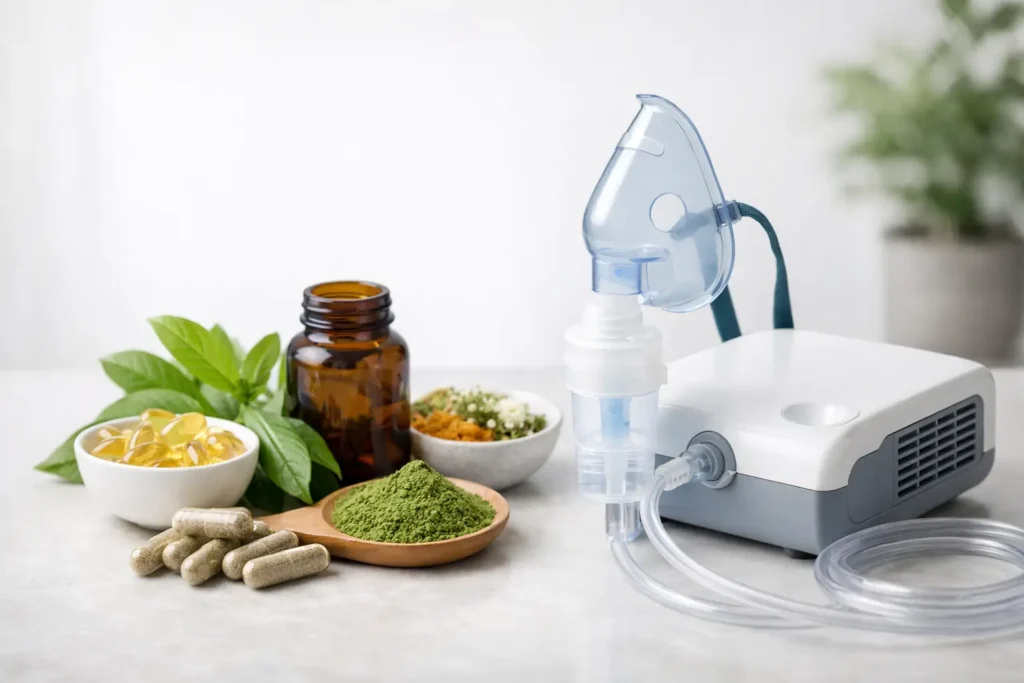
A nebulizer at 2 a.m. is not a small inconvenience. It is the sound of another broken night, another anxious check of your child’s breathing, and another morning when you are expected to lead a meeting on too little sleep. So it makes complete sense to ask: can natural supplements replace nebulizers?
For most children, the honest answer is no – not on their own, and not without the child’s pediatric clinician guiding the decision. A supplement is not a rescue treatment for wheezing, asthma symptoms, or breathing distress. But that does not mean natural support has no place in a thoughtful respiratory wellness plan. The right question is not “medicine or natural.” It is how to protect your child now while addressing the patterns that keep disrupting your family’s life.
What a Nebulizer Actually Does
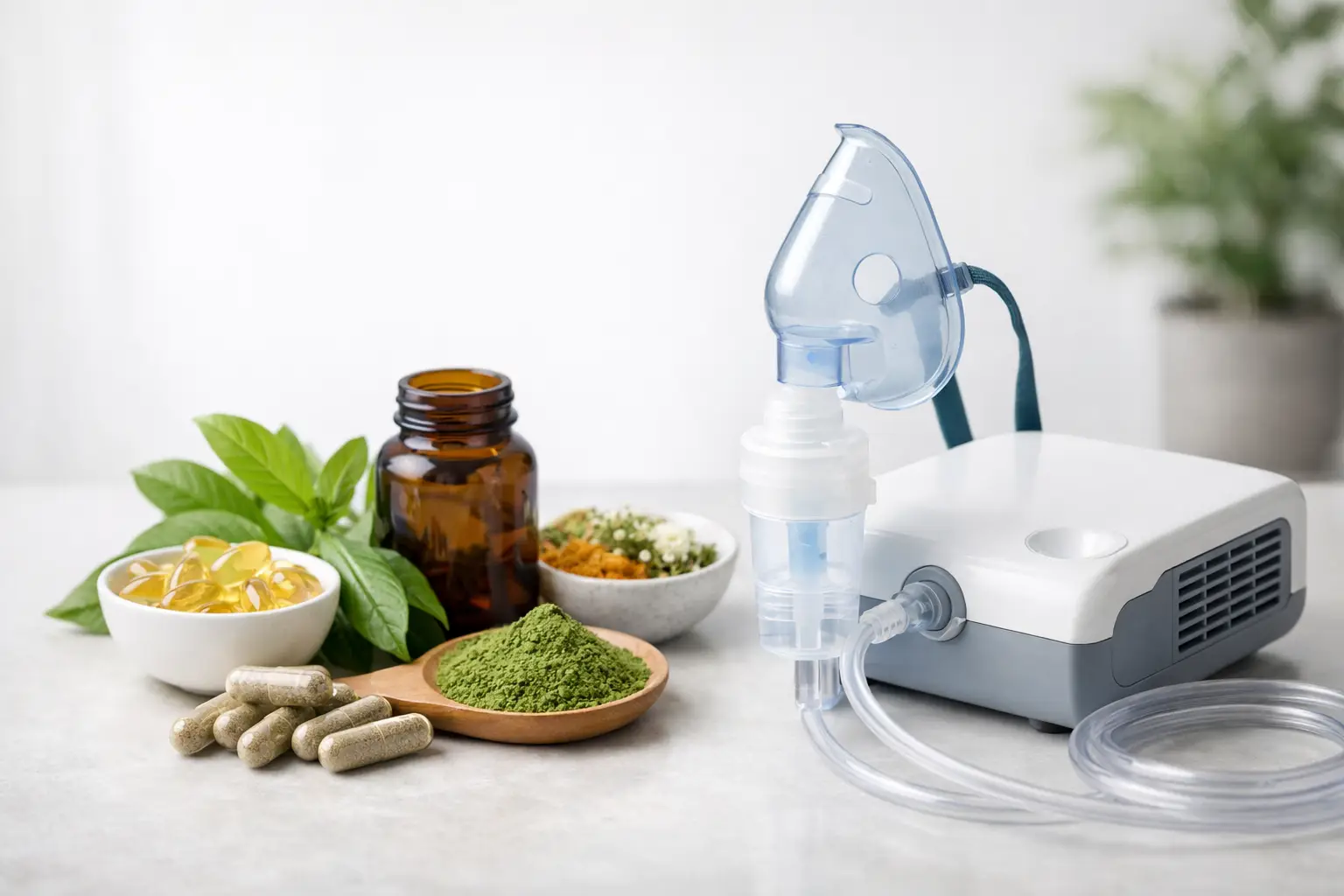
A nebulizer turns prescribed liquid medicine into a mist that a child can breathe into the lungs. Depending on the medication, it may quickly open narrowed airways or deliver anti-inflammatory treatment. That matters when a child is wheezing, struggling to breathe, having an asthma flare, or has been given a specific treatment plan by their clinician.
It is easy to think of a nebulizer as the problem because it represents the exhausting routine: setting it up, persuading a tired child to sit still, cleaning equipment, and wondering whether another clinic visit is coming. But the machine is only the delivery method. The medication and the reason it was prescribed are what need careful attention.
Stopping or replacing prescribed treatment without medical guidance can allow symptoms to worsen. In respiratory care, waiting too long can turn a manageable episode into an urgent one. No wellness product, no matter how appealing the ingredients or how convenient the format, should be presented as a substitute for emergency or prescribed respiratory care.
Can Natural Supplements Replace Nebulizers in a Care Plan?
Natural supplements may be considered as supportive wellness tools, but they are not a direct replacement for nebulized medication. They do not work in the same way, at the same speed, or with the same evidence for acute breathing symptoms.
That distinction protects children and gives parents clearer expectations. If your child has a diagnosed condition such as asthma, recurrent wheeze, or significant allergy-related breathing symptoms, their clinician should decide whether medication can be reduced, changed, or stopped. Sometimes a child’s plan does evolve as symptoms become better controlled. That is a clinical decision based on history, exam findings, triggers, medication use, and sometimes lung testing – not a promise made on a supplement label.
Where natural support may fit is in the broader work of supporting nutrition, routine, hydration, sleep, and overall wellness. Some families also discuss specific supplements with their pediatrician or pharmacist, particularly if a child has dietary gaps, frequent illnesses, or a restricted diet. The goal is to add support responsibly, not to gamble with a child’s breathing.
The difference between prevention support and rescue care
This is the line every busy parent deserves to understand. Prevention support happens over time. It can include consistent meals, adequate sleep, trigger management, regular medical follow-up, and clinician-approved supplements when appropriate. Rescue care is what happens when a child is actively struggling with symptoms.
A natural product may be part of a family’s long-term wellness routine. It should never be the reason you delay a prescribed rescue treatment when your child is coughing hard, wheezing, breathing faster than usual, or telling you their chest feels tight.
The Questions That Matter Before Trying a Supplement
A supplement is not automatically safe simply because it is natural. Children are not small adults, and ingredients can interact with medicines, aggravate allergies, or be unsuitable for a child’s age or health history. Quality also varies widely across products.
Before adding anything new, bring the product name and full ingredient list to your child’s pediatrician or pharmacist. Ask whether it is appropriate for your child’s age, whether it could interact with current medications, and what outcome would be realistic to monitor. If your child has asthma, ask specifically whether their written asthma action plan needs to change. Do not guess.
Be particularly careful with multi-ingredient blends, essential oils taken orally, high-dose vitamins, honey products for children under one, and any product that claims to treat asthma, replace inhalers, or stop attacks. A dramatic promise may feel comforting when you are desperate for a solution. It is not a substitute for evidence or individualized medical care.
If you choose a clinician-approved supplement, introduce only one new product at a time. That makes it easier to notice side effects such as rash, stomach upset, sleep changes, or increased coughing. Keep a simple record of symptoms, nebulizer or inhaler use, nighttime waking, school absences, and known triggers. That information is far more useful at the next appointment than trying to reconstruct a difficult month from memory.
A Smarter Goal Than “Getting Off the Nebulizer”
Many mothers carry a quiet fear that frequent treatments mean they have failed to do enough. You have not. Your child’s respiratory symptoms are not a measure of your effort, your career commitment, or the quality of your parenting.
A better goal is fewer disruptive episodes, clearer decisions, and a child who can breathe comfortably enough to sleep, learn, play, and simply be a child. Sometimes that goal includes a nebulizer. Sometimes it includes an inhaler with a spacer, allergy treatment, changes to the home environment, or a reassessment of the diagnosis. Sometimes it includes a carefully selected wellness routine alongside medical treatment.
Common triggers can include viral infections, pollen, dust mites, pet dander, smoke, fragrances, cold air, and exercise. You do not need to transform your home into a laboratory. Start by noticing patterns. Does the cough worsen at night? After outdoor play? During a particular season? Around strong scents? Those details can help a clinician identify what deserves attention.
For families interested in mushroom-based wellness products, including wild tiger milk mushroom formulations such as Tigrox by Stella, the same standard applies: discuss the ingredients with your child’s clinician first, use products as directed, and do not treat them as rescue medicine. A convenient liquid sachet may solve the daily battle over taste and preparation, but convenience should never be confused with clinical equivalence to prescribed treatment.
Know When It Is Not Time to Experiment
Call emergency services or seek urgent medical help if your child is struggling to breathe, has blue or gray lips or face, cannot speak or cry normally because of breathlessness, has ribs or skin pulling in around the chest or neck, seems unusually sleepy or confused, or is not improving with their prescribed rescue plan.
If symptoms are becoming more frequent, nighttime coughing is persistent, treatments are needed more often, or your child is missing school and activities, schedule a prompt medical review. Recurrent symptoms deserve a plan, not endless improvising.
This is where a protective approach matters most. Your child does not need you to choose a side between conventional medicine and natural wellness. They need you to build a care team and a routine that take breathing seriously.
Build a Plan Before You Try to Replace Nebulizers With Supplements
Ask your child’s clinician for a written plan that tells you what to do on good days, during early symptoms, and during an emergency. Make sure every caregiver understands it. Keep prescribed treatments available, check expiration dates, and ask for a demonstration if using a nebulizer or inhaler still feels confusing.
Then bring your wellness questions into that conversation. Ask what lifestyle adjustments are worth your energy, which supplements are appropriate if any, and how you will know whether the overall plan is helping. A responsible plan makes room for your values without asking you to ignore medical reality.
The real win is not throwing away a nebulizer to prove you chose the natural route. It is having fewer frightened nights, more confident decisions, and a child whose care is guided by both vigilance and compassion.
Pingback: Why My Child Keeps Coughing: What to Check - tigroxbystella.store
Pingback: When Is Specialist Care Needed for Your Child? - tigroxbystella.store