
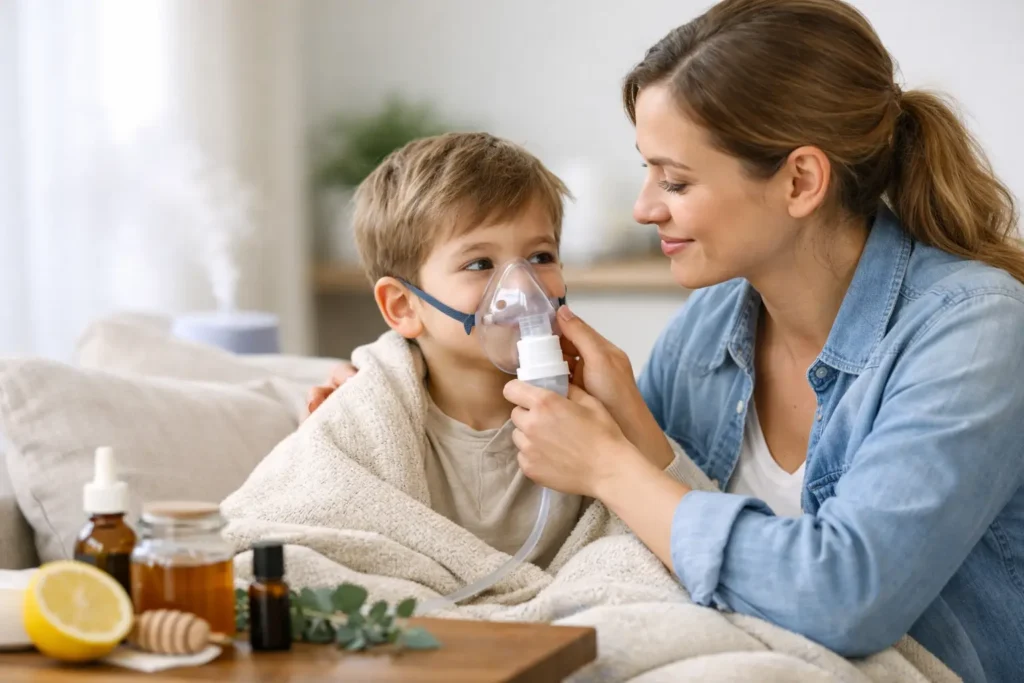
The 2:14 a.m. cough is never just a cough to a working mother. It is the next day’s meeting you may have to move, the sleep your child is losing, the nebulizer routine you hoped would be temporary, and the quiet worry that settles in when the same respiratory cycle keeps returning. A natural child respiratory routine can bring order to those difficult weeks, but it should be built around safety, consistency, and real-life practicality – not panic or miracle promises.
For children ages 5 to 10, recurring coughs, stuffy noses, allergy-triggered symptoms, and colds can feel relentless. A routine cannot diagnose, cure, or replace prescribed treatment. What it can do is help you reduce avoidable irritants, support the basics that matter every day, track patterns clearly, and know when it is time to call the pediatrician instead of trying to power through another rough night.

Start With the Patterns, Not the Product
Before adding any wellness product, take one week to notice what is actually happening. Is the cough worse after soccer practice, in the bedroom, during pollen season, or after a cold? Does it mainly show up at night? Is there snoring, mouth breathing, wheezing, itchy eyes, or a runny nose that keeps returning?
This is not busywork. A child who coughs after a viral illness may need a different conversation with their clinician than a child whose symptoms appear around dust, pets, exercise, or seasonal allergies. Your notes give you useful details rather than the vague, exhausted answer of, “It happens all the time.”
Keep it simple: record the time of symptoms, likely trigger, sleep disruption, medications used, and what seemed to help. If your child has an asthma action plan or uses an inhaler, write down how often rescue medication is needed. Increasing reliance on rescue medicine is not something to normalize or manage with supplements alone. These notes become the foundation of any natural child respiratory routine you build from here.
The Natural Child Respiratory Routine: Morning to Bedtime
The best routine is the one you can repeat during a packed workweek. It does not require you to become a full-time researcher, make complicated remedies before sunrise, or negotiate with a child over something they hate taking.
Make mornings lower-irritant
Start with the air your child breathes. Keep bedrooms smoke-free and vape-free, including exposure from visitors or residue carried indoors. If outdoor air quality is poor or pollen is high, check conditions before sending your child outside for extended play. On high-pollen days, a quick face-and-hands wash after school and a change of clothes can help keep outdoor allergens from following them into bed.
Hydration belongs in the morning routine too. A water bottle packed for school is ordinary, but it matters. Dry throat irritation can make coughs feel harsher, especially in air-conditioned classrooms and busy days when children forget to drink.
If your child has prescribed medication, that remains part of the plan exactly as their clinician directed. “Natural” should never mean stopping an inhaler, steroid, allergy medicine, or nebulizer treatment without medical guidance. The goal is responsible support around the care your child already needs. This is exactly the kind of daily habit a natural child respiratory routine is built on.
Protect the After-School Part of Your Natural Child Respiratory Routine
After school is where many families lose the routine. You are answering messages, making dinner, and trying to shift from professional mode to mom mode. Create a short reset instead of adding a complicated project: wash hands and face, change out of outdoor clothes when allergy symptoms are active, offer water, and take a few minutes to notice how your child is breathing.
If exercise reliably triggers coughing, wheezing, chest tightness, or unusual fatigue, do not assume your child is simply out of shape. Bring that pattern to their pediatrician. Children can have exercise-related respiratory symptoms that need assessment and a specific plan.
This is also the time to avoid common household irritants. Strong cleaning sprays, scented candles, incense, perfume-heavy products, and aerosol room fresheners can aggravate sensitive airways in some children. You do not have to make your home sterile. You do need to be thoughtful about what is repeatedly sprayed into the spaces where your child sleeps and plays.
Build the Bedtime Piece of Your Natural Child Respiratory Routine
A coughing child rarely sleeps well. A mother listening for that cough rarely does either. And when sleep collapses, everything else follows: behavior, immunity, work performance, patience, and the ability to think clearly about next steps.
Aim for a cool, comfortable room and wash bedding regularly, especially when allergy symptoms are active. If dust mites are a known concern, discuss practical bedroom measures with your child’s clinician or allergy specialist. A humidifier may help some children when indoor air is dry, but it needs careful cleaning. A neglected humidifier can grow mold or bacteria, which defeats the purpose.
For a stuffy nose, saline spray or drops may be useful for some children, but ask your pediatrician what is appropriate for your child’s age and symptoms. Avoid over-the-counter cough and cold products unless your clinician specifically recommends them. “Natural” does not automatically mean safe, especially with essential oils, herbal blends, or concentrated products that can irritate airways or interact with medications.
Where a Supplement Fits in a Natural Child Respiratory Routine (and Where It Does Not)
Parents often want a natural option because they are tired of the cycle, not because they are careless about medical care. That is understandable. A well-chosen supplement may fit into a broader wellness routine when it has age-appropriate ingredients, clear dosing, quality controls, and review by your child’s healthcare professional.
But a supplement should not be marketed as a substitute for urgent care, an asthma plan, or a medication your child has been prescribed. Be especially cautious if a product promises to eliminate wheezing, replace nebulizers, or work for every child. Respiratory symptoms have different causes. Honest guidance leaves room for that reality.
At Tigrox by Stella, the coaching approach begins with understanding the child’s history and current situation before recommending a wellness protocol. That qualification step matters. A family dealing with occasional seasonal discomfort has different needs from a child who wakes coughing several nights a week or needs frequent rescue treatment.
If you are considering any natural protocol, ask direct questions. Is it appropriate for my child’s age? What are the ingredients and doses? Could it interact with current medicines? What evidence supports its intended use? What symptoms mean we should stop and call the doctor? A trustworthy advisor should welcome every one of those questions. Asking them is a core habit of any natural child respiratory routine, not an optional extra.
Know the Red Flags Before You Need Them
No routine should make you second-guess an emergency. Seek urgent medical help or call emergency services if your child is struggling to breathe, breathing very fast, has blue or gray lips or face, cannot speak in full sentences because of breathlessness, seems unusually drowsy or confused, has ribs pulling in with breaths, or does not improve with their prescribed rescue plan.
Call your child’s clinician promptly for new or worsening wheezing, frequent nighttime cough, repeated vomiting with coughing, a fever that concerns you, dehydration, symptoms lasting longer than expected, or any time you feel something is off. You know your child’s normal better than anyone. Trust that instinct, then pair it with professional care. Watching for these signs is part of running a safe natural child respiratory routine, not a replacement for medical judgment.
Give Yourself a Routine You Can Sustain
The pressure on ambitious mothers is brutal: show up prepared at work, keep the household moving, and somehow solve a child’s health struggle before it disrupts another week. You do not need a perfect routine. You need a clear one.
Start with one page of symptom notes, a calmer bedroom environment, dependable hydration, fewer avoidable irritants, and a pediatrician-guided plan for persistent symptoms. Add any wellness support thoughtfully, not desperately. The most powerful next step may simply be replacing late-night guessing with a plan you can follow – and the confidence to ask for medical help when your child needs it. That is what a sustainable natural child respiratory routine looks like in practice.