
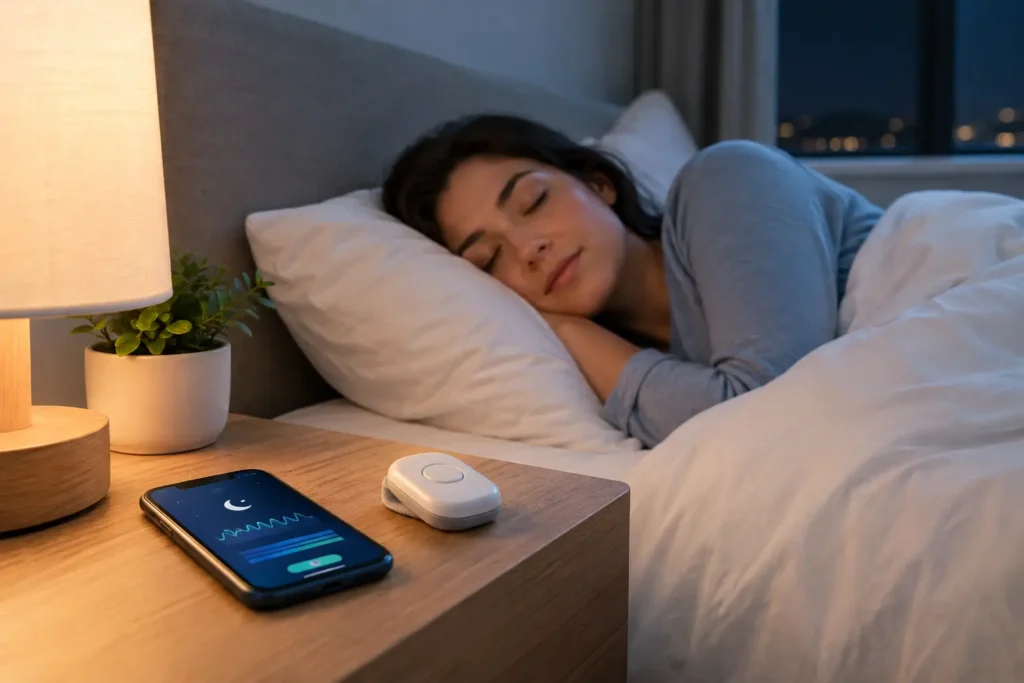
The clock says 2:13 a.m. Your child is finally asleep, but you are not. You are listening for that faint whistle in their chest, wondering whether it is getting worse, whether they will need a nebulizer again, and how you will function in tomorrow’s meeting after another broken night. When respiratory symptoms keep returning, learning to track nighttime wheezing patterns can turn a frightening blur into useful information for your child’s pediatrician.
For general guidance on wheezing in children, MedlinePlus has a clear overview of causes and when it needs medical attention.
This is not about becoming your child’s doctor or trying to “wait it out” when they need care. It is about noticing what happens before, during, and after a hard night so you can act sooner, communicate clearly, and stop relying on memory when you are exhausted.
Why Wheezing Often Feels Worse at Night
Nighttime wheezing can be more noticeable for several reasons. Lying down may make drainage from the nose and sinuses more irritating. Bedroom triggers such as dust, pet dander, mold, fragrance, or dry air may play a role. Viral illnesses, seasonal allergies, asthma, and other respiratory conditions can also cause cough and wheeze to flare after bedtime.
The pattern matters. A child who wheezes only during colds may need a different clinical evaluation than a child who coughs and wheezes several nights each week, wakes with shortness of breath, or struggles during exercise. One isolated noisy night can happen. Repeated nights that steal your child’s rest – and yours – deserve a closer look.
Do not assume every sound is wheezing. Wheezing is usually a high-pitched, musical or whistling sound, often more obvious when breathing out. Congestion in the nose, snoring, a harsh cough, and noisy breathing from the throat can sound different. If you can safely capture a short audio or video clip without disturbing your child, it may help the pediatrician understand what you are hearing.
How to Track Nighttime Wheezing Patterns Without Making Life Harder
You do not need a complicated spreadsheet or another project to manage. You need a simple bedside note on your phone that takes less than two minutes. Record the details while they are fresh, especially after a rough night when the next morning will be a rush.
Start with the basics: the date, bedtime, and the approximate time symptoms began. Write down whether your child woke up coughing, whether you heard wheezing, and how long the episode lasted. Note whether they were able to return to sleep easily or whether breathing symptoms kept waking them.
Then add context. Did they have a runny nose, fever, itchy eyes, sore throat, or a known cold? Were they playing outside during high-pollen season? Did they sleep at a relative’s home, spend time around a pet, or sleep in a room with a strong fragrance, humidifier, or visible dampness? You are not trying to prove a cause. You are looking for repeatable clues.
It also helps to document what you did and what happened next. If your child has medication prescribed by their clinician, record the name, time, and response. Did symptoms improve within the expected window? Did they continue to cough? Did they seem comfortable, or were they working hard to breathe? This record helps the care team assess whether the current plan is working.
A useful one-line entry might read: “Tuesday: asleep at 8:45 p.m., coughing started at 11:30 p.m., wheeze heard on exhale, woke twice, stuffy nose, used prescribed rescue medicine at midnight, calmer by 12:30 a.m.” Clear, quick, and far more useful than “bad night.”
Watch for Frequency, Not Just Intensity
Parents often remember the worst episode, and of course they do. But frequency is one of the most valuable things to track. Notice whether wheezing happens once a month, every time your child gets a cold, only in a certain season, or multiple nights in a single week.
Also watch for daytime signs. A child who seems fine at breakfast but coughs during running, laughs until they cough, tires unusually fast, or wakes repeatedly at night may need a prompt conversation with their clinician. Nighttime symptoms can affect school focus, mood, and recovery long before a child has the words to explain how tired they feel.
What to Bring to the Pediatrician
Working mothers are used to walking into meetings prepared. Bring that same clarity to an appointment. A short seven-to-14-day record is often enough to reveal whether there is a pattern worth investigating. If episodes are less frequent, bring notes from the last few occurrences instead.
Include the timing of symptoms, possible exposures, cold or allergy symptoms, sleep disruption, and how prescribed treatments seemed to work. Mention family history of asthma, eczema, allergies, or other breathing concerns if relevant. If your child uses a nebulizer, inhaler, spacer, or other prescribed device, ask the clinician to review technique. A treatment can appear ineffective when the device is not being used correctly or the plan needs adjustment.
Ask direct questions: What could be triggering this? Is this consistent with asthma or another condition? What symptoms mean we should call the office? What symptoms mean we should seek urgent care? You are not overreacting by asking. You are protecting your child’s sleep, lungs, confidence, and ability to enjoy normal childhood without every cough becoming a family emergency.
Red Flags: When Tracking Is Not Enough
A symptom journal is for patterns, not for delaying urgent help. Seek emergency care right away or call 911 if your child has severe trouble breathing, blue or gray lips or face, pauses in breathing, confusion, extreme sleepiness, difficulty speaking because of breathlessness, or skin pulling in hard around the ribs or neck with breaths.
Contact a medical professional promptly for worsening wheezing, breathing that seems labored, symptoms not improving with the child’s prescribed rescue plan, or a child who cannot drink, talk, or rest comfortably. For babies and very young children, it is especially wise to seek guidance early because respiratory symptoms can change quickly.
Trust the part of you that knows your child. A calm child with a mild cough is different from a child who looks frightened, exhausted, or like they are fighting for each breath. You never need permission to get help when breathing is involved.
Reduce Bedroom Irritants While You Gather Answers
You cannot control every trigger, and not every case of wheezing is caused by the bedroom. Still, a few low-risk changes can reduce unnecessary irritation while you work with your child’s clinician. Keep smoke and vaping completely away from the home and car. Avoid scented candles, strong sprays, incense, and heavily fragranced laundry products near where your child sleeps.
Wash bedding regularly, keep stuffed animals to a manageable number, and address leaks or visible mold promptly. If pollen appears to be a factor, changing clothes after outdoor play and keeping bedroom windows closed during high-pollen periods may help. If dry air is an issue, ask your child’s clinician whether a humidifier makes sense and clean it exactly as directed. A poorly maintained humidifier can worsen air quality rather than improve it.
Natural wellness support may be something your family wants to discuss, especially when you are tired of reaching for quick fixes after every rough night. But it should complement, never replace, a pediatrician’s evaluation or prescribed respiratory treatment. Be cautious with products that promise to cure wheezing, eliminate asthma, or let a child stop medication without medical supervision. Your child deserves care built on observation, professional guidance, and safety – not pressure or wishful thinking.
Give Yourself a Better Starting Point Tomorrow Night
Set up one note on your phone before bedtime. Add the date, bedtime, symptoms, possible triggers, and what helped. That is enough. You do not have to solve your child’s respiratory health at 2 a.m.; you only have to notice what is happening and respond appropriately.
Over time, those small notes can give you something powerful: a clearer conversation, a more confident next step, and fewer nights spent wondering whether you imagined the pattern. Your child needs a rested, steady advocate – and you deserve to feel like one.